
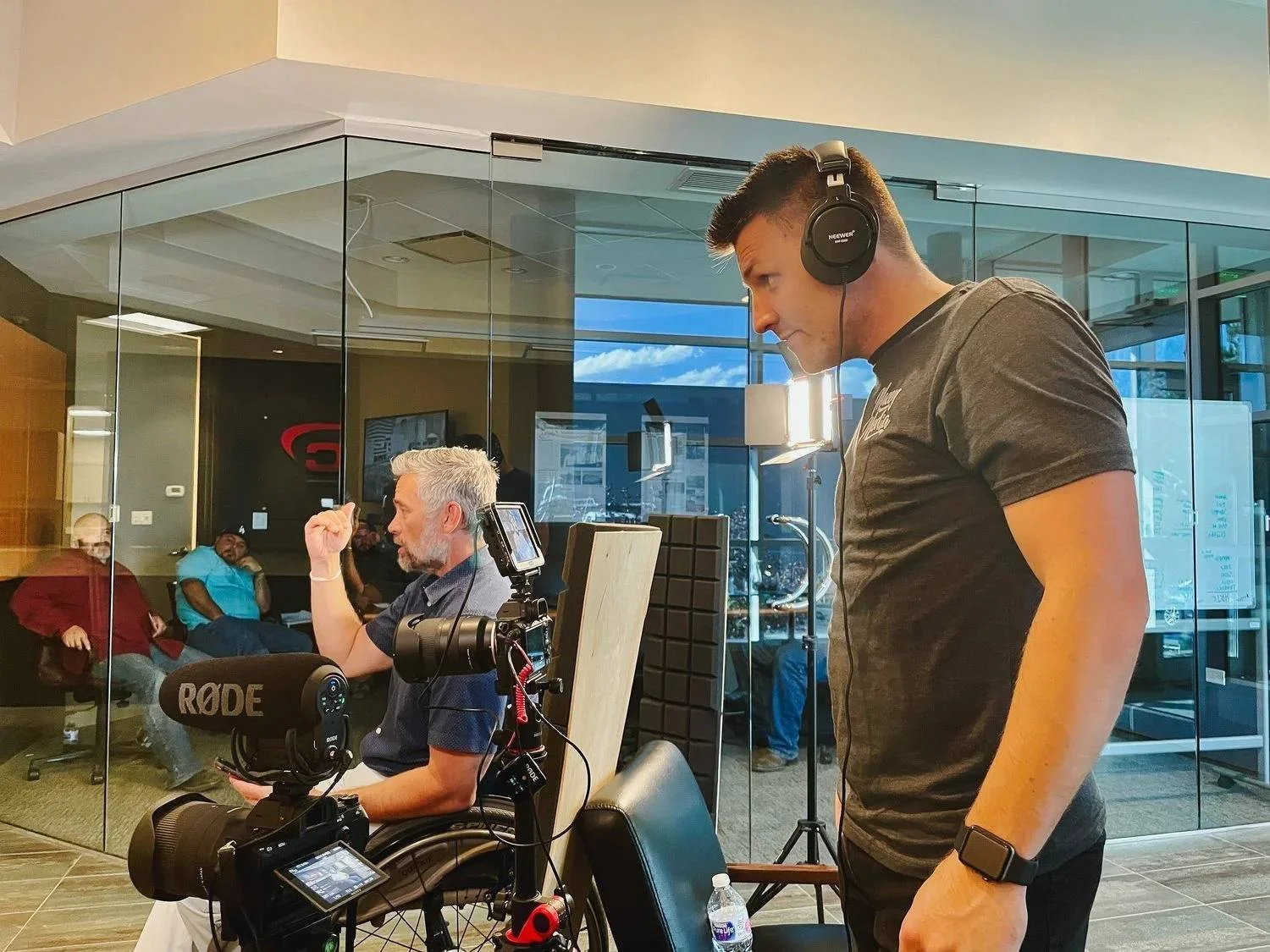
Cool job alert.
A brand I follow posted an opening for a full-time video content creator. Early in my career I would've jumped at it. As an agency owner who hires for similar roles, I clicked in to see the qualifications and the pay.
It was four jobs in one: pre-production strategy, videography on everything from big cinema rigs to smartphones, editing, and social media management. The salary was $50,000 to $70,000 a year.
So, in-house vs. agency: which is better for video? In-house wins when you need small, quick content every day and have someone to direct it. An agency wins when you need strategy, a full crew and polished videos a few times a year without the payroll. Most companies that do a lot of video end up using both. Below are the numbers on each, the freelancer option nobody talks about, and how to split the work.
Watch Bobby break down that job listing on LinkedIn
Side by Side: What Changes With Each Option
Cost: In-house means salary, benefits, gear and software every month of the year. An agency is paid per project or on a retainer.
Skills: In-house gives you one person's strengths. An agency brings a team: strategy, camera, audio, lighting, editing and SEO.
Speed: In-house is fast for small, daily content. An agency is fast on big projects and books small ones ahead.
Brand knowledge: In-house lives in your building. An agency has to learn your brand, so the kickoff matters.
Gear: In-house, you buy it, insure it and replace it. With an agency, it's included.
Scaling up: In-house, you hire again. With an agency, you add crew for the shoot day and drop it after.
Risk: In-house, your video stops when one person is out. An agency has backups.
What an In-House Video Hire Really Costs
Start with salary. According to the U.S. Bureau of Labor Statistics, median pay is $75,420 for film and video editors and $74,990 for camera operators.
That listing paid $50,000 to $70,000 and asked for both of those jobs, plus strategy and social media. That's below the median for either skill on its own. Underpay a role this big and you should plan on turnover.
Then add what the salary doesn't cover:
Benefits and payroll taxes: In private industry, benefits make up 30% of total compensation, per the BLS Employer Costs for Employee Compensation report. That's about 43 cents on top of every dollar of wages.
Gear: Cameras, lenses, lights, audio, a drone and a computer that can edit 4K. My own travel kit carries $15,000+ of equipment, and that's one bag.
Software: Adobe's Creative Cloud Pro plan runs $69.99 a month on an annual plan at the regular price, about $840 a year, before music licensing and stock footage.
Hiring time: SHRM's benchmarking data puts the median time to fill a nonexecutive role at 39 days. Then the new hire needs time to learn your brand, your products and your approval process.
Here's the year-one math for that job listing:
Salary: $50,000 to $70,000
Benefits (about 43% of wages): $21,400 to $30,000
Starter gear kit: about $15,000
Editing software: about $840
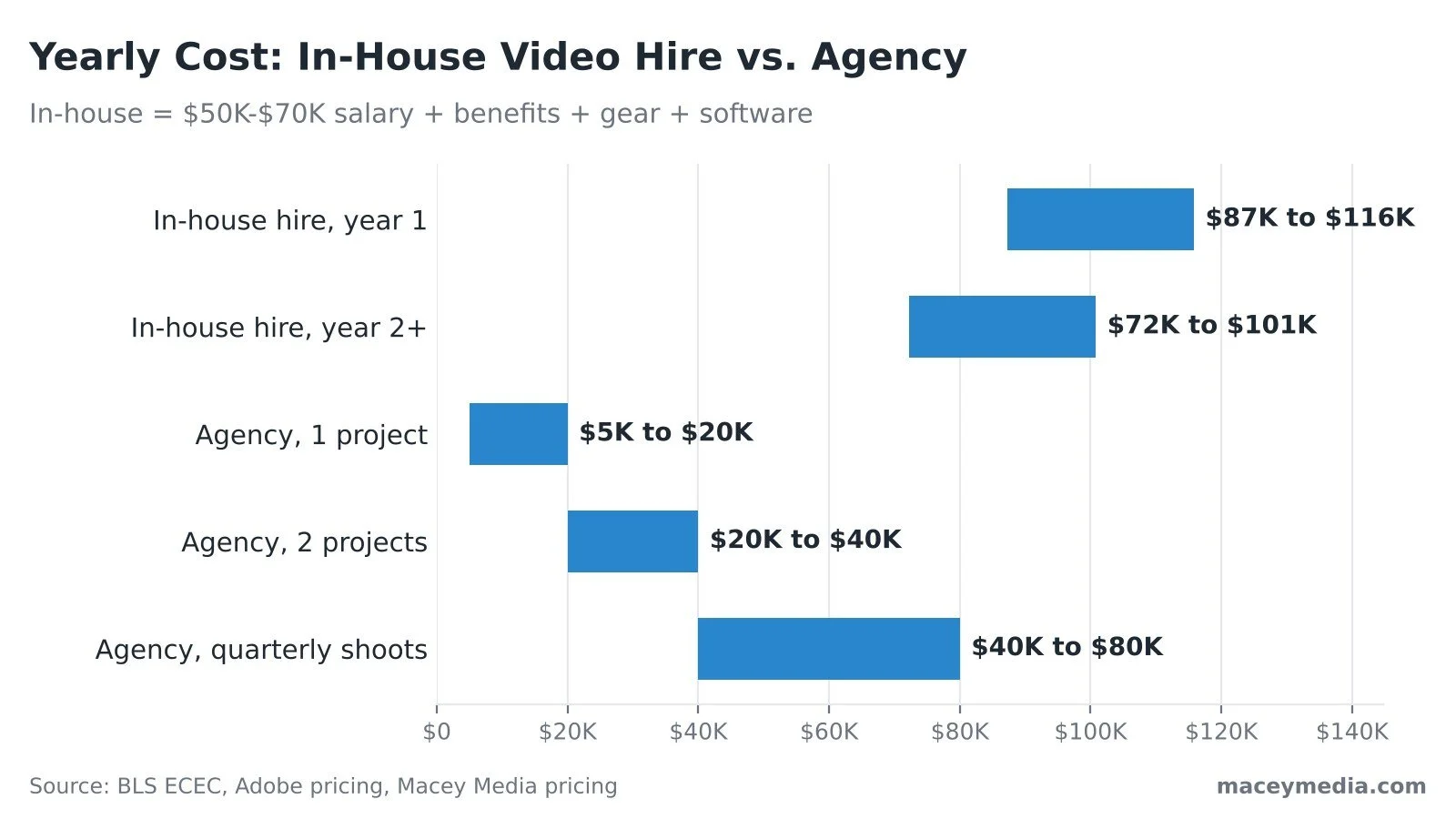
Year-one total: roughly $87,000 to $116,000
Year two drops a bit because the gear is paid for, but you're still near $72,000 to $101,000 before repairs, upgrades and raises.
What the Same Money Buys From an Agency
Our video projects start at $5,000, and most land between $10,000 and $20,000. Two projects a year would run about $20,000 to $40,000. A shoot every quarter lands around $40,000 to $80,000. That's still under the cost of one in-house hire, and every shoot day comes with a crew, lights, audio and an editor. For prices by type of video, see our guide to corporate video production cost.
The catch: an agency project isn't a full-time person. You won't get someone filming your Tuesday team lunch. That's why the right answer depends on the kind of video you need, not only the price.
Before you sign with any agency, ask two questions the comparison guides skip:
Who owns the footage? Get the final videos and the raw files, or at least know what it costs to get them later. That footage is what your team will cut into clips for months.
What's the plan after delivery? A great video that sits on a hard drive does nothing. A good content marketing agency should help you plan where each cut goes and how it gets found on Google and YouTube.
This short video shows how we run a project from strategy to shoot day to the finished library. It's the part an in-house hire would have to do alone.
The Unicorn Problem
Great video strategists, camera operators, editors and social media managers are usually different people with different brains. Finding one person who's great at all four is rare.
Strategy: picking topics people search for, writing scripts and planning shoots so one day produces many videos.
Camera: framing, lighting, audio and running two cameras at once on bigger shoots.
Editing: pacing, color, sound mixing, captions and versions for every platform.
Social media: posting on schedule, writing captions, answering comments and reading the numbers.
What usually happens is the hire is strong in one or two of these and stretched thin in the rest. The editing is great but the strategy is guesswork. Or the footage is beautiful but nothing gets posted on time.
That's not a knock on the person. It's a lot to ask of anyone. I've been a jack of all trades my whole career, and even I was surprised by that listing.
When In-House Video Is the Right Call

An in-house creator is a good fit when most of these are true:
You need content every day: Daily social posts, quick product updates, stories and event coverage.
Your brand moves fast: Real-time content that can't wait for a booked shoot.
You have a marketing leader to direct them: A creator needs someone setting goals and saying no to random requests.
You can fund the gear and software: On top of the salary, every year.
Your videos are mostly short and simple: Phone-quality clips that live for a day or a week. Get the iPhone video settings right and those clips hold up fine.
If you go this route, write the job around one or two core skills, pay close to market and plan to bring in outside help for the big pieces.
When an Agency Is the Right Call
An agency is the better fit when your video has bigger jobs to do: customer stories that need testimonial video production, brand films, commercials, anything that needs to rank and convert, or a big batch of content in a short window.
Here's a recent example. For one client, we film quarterly. Renting a hotel conference room was going to cost way more than upgrading my room to a suite.
So we moved the furniture, set up a green screen, two cameras and lights, and filmed 12 long-form YouTube videos in one shoot. That's a year of YouTube content, plus a social media plan cut from those videos.
That's what running a content agency looks like behind the scenes: people solving problems to save the client money and still get the job done right. An in-house hire with one camera and no crew would have needed weeks to produce the same library.
Where Outside Teams Shine: The Multi-Video Series
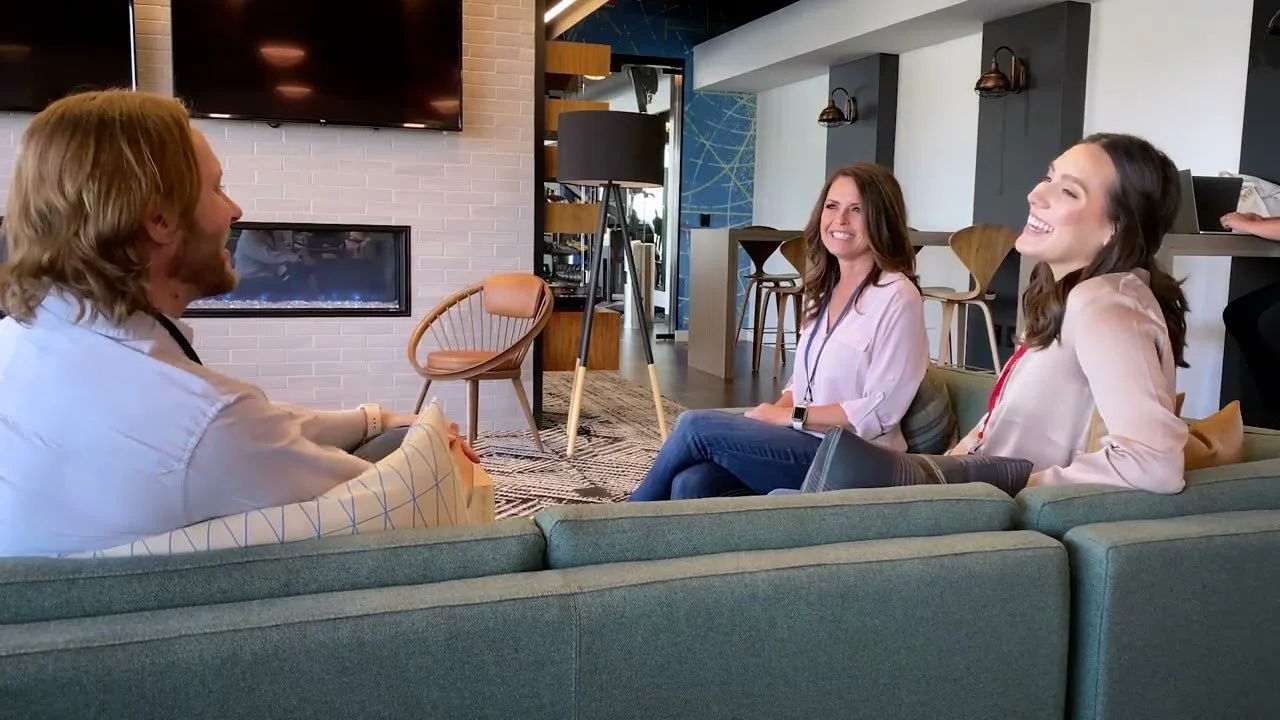
A series is where the in-house vs. agency math tips hardest. You need the same look, sound and pacing across every episode, a script plan that covers the whole topic, and enough crew to film several videos in a few days. That's hard for one person to pull off between their daily posts.
RainFocus, an event software company, brought us in for a training series. The episodes cover topics like using integrations to build an event, creating a community, and the day-of-event experience. Each one stands on its own, and together they read as one program.
This is one episode from that RainFocus series. Notice how it's built to answer one question well, so a viewer can find the exact video they need.
The Stanford Medicine Improvement Team did the same thing for their training content. One video in that series covers building an improvement project team. A topic like that has to be clear and calm, and it has to match the rest of the series.
If a training series is on your list, here's how we approach training video production and what to compare before you hire anyone.
The Third Option: Freelancers
Most in-house vs. agency comparisons skip freelancers, but a lot of companies start there.
A freelancer is a good fit when the job is small and clear: one interview, a simple edit of footage you already have, or extra hands on a shoot day. You pay a day rate and skip the payroll.
The trouble starts when the project grows. A two-camera shoot needs a second shooter, an audio person and an editor. Now you're hiring three or four freelancers, checking their schedules, matching their gear and making sure the edit fits your brand. You've become the producer. That coordination is most of what you pay an agency to do.
If you go the freelance route, start with these questions to ask a videographer before you book anyone.
The Hybrid Setup Most Companies End Up With
Big brands figured this out a while ago. In an ANA survey, 82% of member companies had an in-house agency, and 92% still worked with outside agencies. Building a team in-house didn't replace outside help. It changed what they used it for.
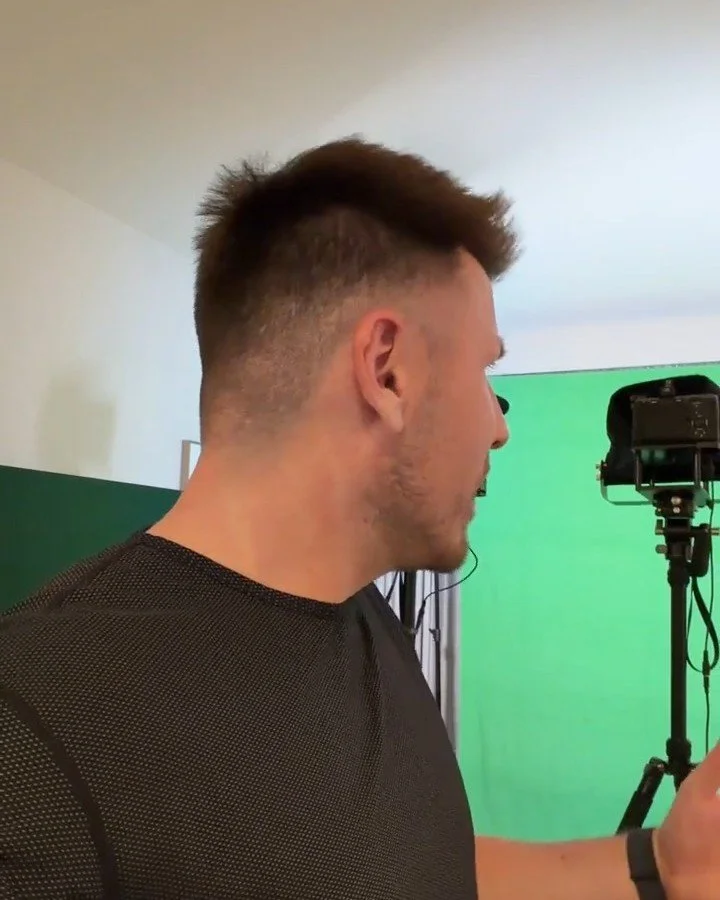
In-house handles the daily, quick-turn stuff: social posts, stories, event clips and phone videos.
The agency handles strategy, the big shoots and the high-stakes pieces, and hands your team a library of content to post for months.
We work this way with clients, and we work this way ourselves. For more than four years I've worked with a remote video editor through a staffing partner, and he's helped us edit hundreds of videos. The right partners let a small team do big work.
The trick is planning. When we know your in-house person will post three times a week, we shoot extra B-roll, vertical cuts and short clips on every shoot day. We call this content repurposing, and it's where a hybrid setup pays for itself.
To make the split work, agree on a video content strategy first: topics, keywords, formats and a posting calendar. Batch the big shoots into one to four days a year. Hand off organized folders of edited videos, raw clips and captions. Let your in-house person fill the gaps between shoots. Then look at what's getting views and leads every quarter and adjust the next shoot.
Questions to Answer Before You Decide
How much video do we need each month, and what kind?
Who will set the strategy and measure results?
Can we afford the gear and software on top of salary?
What happens to our video when that one person is out?
Do we need our videos to rank on Google and YouTube?
Are our big videos one-time projects, a series or ongoing?
If the answers point to daily, simple content, hire. If they point to a few big projects or a series, bring in a team. If they point to both, do both.
Questions People Ask About In-House vs. Agency Video
Is it cheaper to have an in-house video team or an agency?
It depends on how much video you need. One in-house creator on a $50,000 to $70,000 salary costs roughly $87,000 to $116,000 in year one once you add benefits, gear and software. If you need a few big projects a year, an agency usually costs less. If you need new content every day, an in-house hire can pay off.
How much does an in-house video producer cost?
The U.S. Bureau of Labor Statistics reports median pay of $75,420 for film and video editors and $74,990 for camera operators in its latest pay data. Benefits add about 43 cents for every dollar of wages, and gear and software come on top of that.
What are the downsides of an in-house video team?
One person rarely covers strategy, filming, editing and social media equally well. Gear costs add up, and your video stops when that person is sick, on vacation or leaves. Many in-house creators also get buried in daily requests and never get to the bigger projects.
How much does a video production agency cost?
Our video projects start at $5,000, and most land between $10,000 and $20,000 depending on scope. That price includes the crew, gear and editing. A medium-sized project usually takes 4 to 6 weeks.
Should I hire a freelancer instead of an agency?
A freelancer is a good fit for a single, simple piece like one interview or an edit of footage you already shot. For multi-camera shoots, a video series or anything that needs strategy, you'll usually end up hiring several freelancers and managing them yourself, which is what an agency does for you.
Can you use in-house and agency video together?
Yes, and most larger companies do. Your in-house person handles quick daily content like stories, event clips and phone videos. The agency handles strategy and the big shoots, then hands your team a library of footage to post for months.
Need a Video Team for the Big Days?
My team plans the strategy, brings the crew and gear, and edits everything, and we plan every shoot so your in-house people have months of content to post. Video projects start at $5,000, most land between $10,000 and $20,000, and a medium project takes 4 to 6 weeks.
See our corporate video services or tell us about your project. You can also call our Utah team at (385) 831-1130.
